
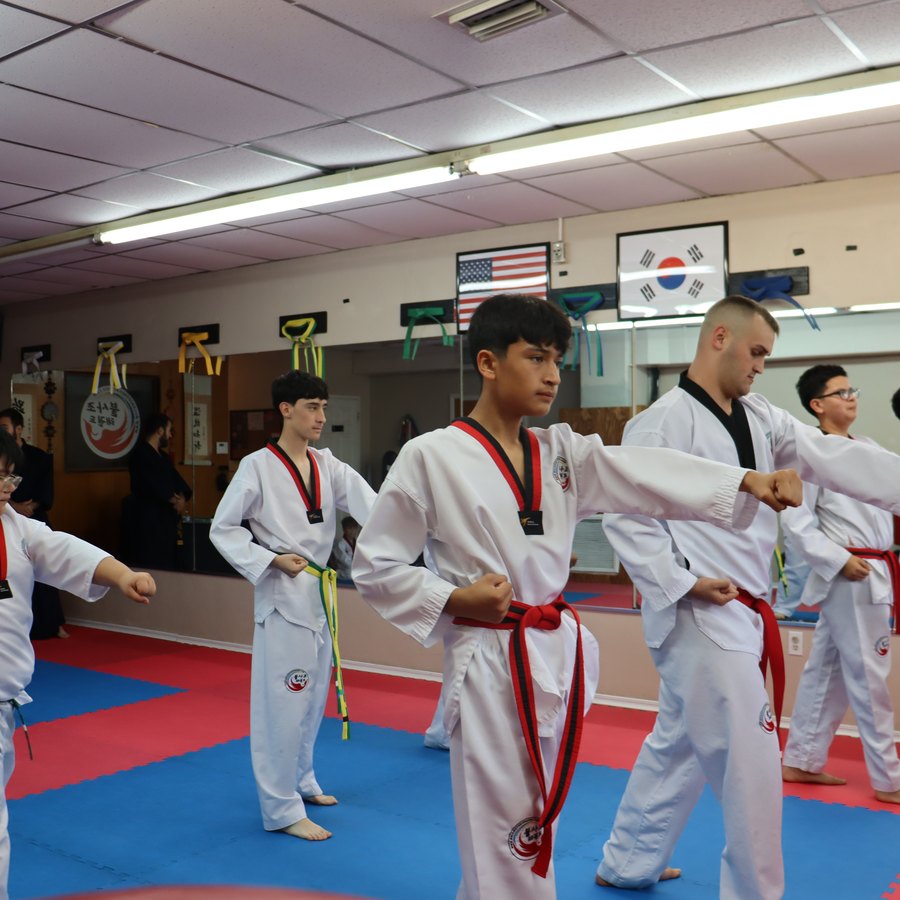
For a beginning student, consistency and a positive experience matter more than a long session. USA Taekwondo's athlete development model emphasizes practice, age-appropriate learning, fun, and reducing overuse and burnout. Families can keep home practice small and relaxed.
Try a short practice block
Pick one item the instructor has assigned, such as a section of a form or a basic movement. Try five focused minutes, take a five-to-fifteen-minute break, then choose whether to do one more short round. Another option is a single ten-to-fifteen-minute session. These are examples to adapt, not required times or a performance prescription.
A simple routine
- Choose one goal: for example, remember the first few moves of a form.
- Recall, then check: try what you remember, then use the instructor's approved reference or ask at the next class.
- Practice carefully: move with control and stop when the student is tired, frustrated, or uncomfortable.
- Finish on a win: name one thing that improved and write down one question for class.
Make the space safe
Clear the floor and give kicks and steps plenty of room. At home, stick to the student's assigned solo material. Do not practice sparring, throws, board breaking, high-impact jumps, or partner self-defense without an instructor present. A parent can help younger students remember the sequence and keep practice encouraging.
Plan rest as well as practice
Children involved in organized sports need recovery time. The American Academy of Pediatrics recommends at least one day each week away from organized sports activity for young athletes. That does not mean a child must avoid ordinary play; it is a reminder not to fill every day with structured training.
Sources and further reading
Official source pages checked October 15, 2026.
- USA Taekwondo: American Development Model — youth sport development, practice, enjoyment, and reducing burnout.
- American Academy of Pediatrics: Tips to Prevent Sports Injuries in Children & Teens — rest, breaks, and responding to pain.