
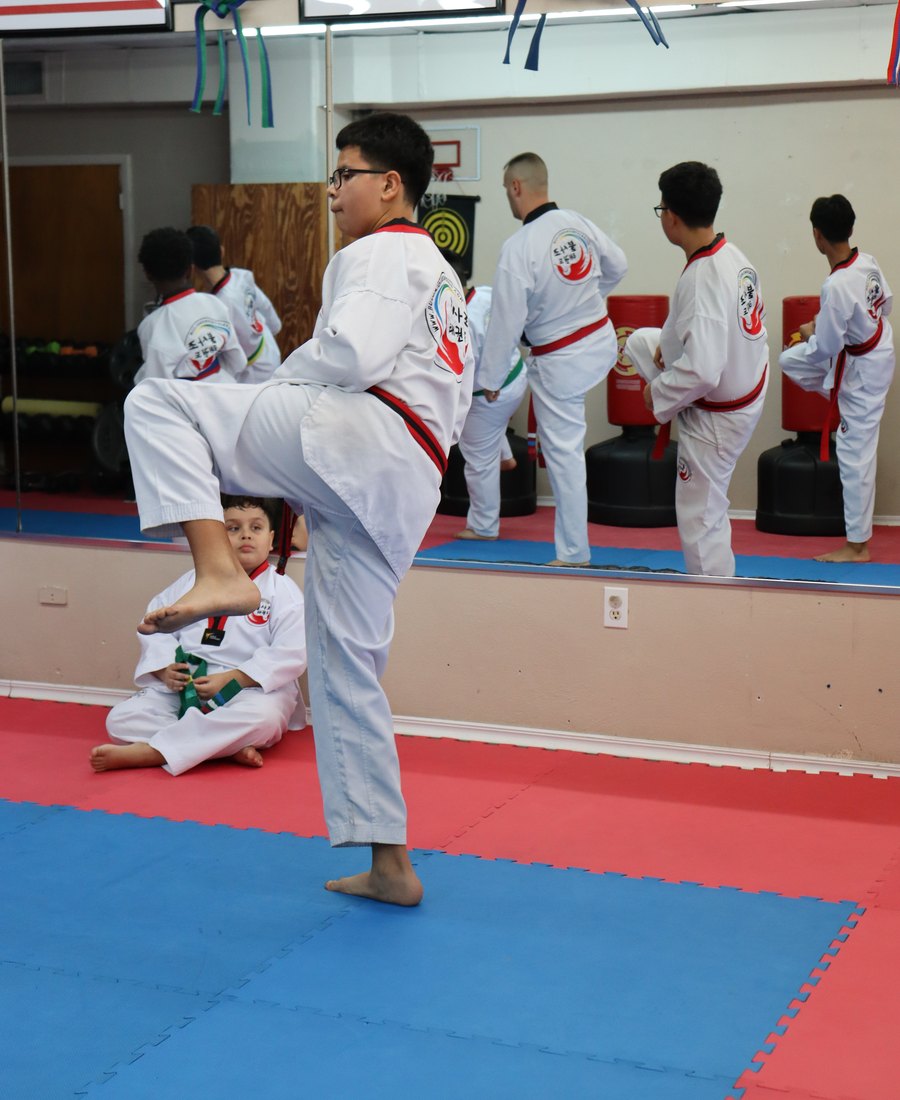
This is general education, not a personalized flexibility routine. A student should follow the instructor's class or tournament warm-up and never push a stretch through pain.
Before class or a tournament: warm up with movement
A dynamic warm-up uses controlled movement rather than holding one stretch still. Begin gently and build up: easy walking or marching, light steps, and instructor-approved movements that resemble the activity. For Taekwondo, a coach may guide students through comfortable leg and hip movements before faster kicks. Start small and keep movements controlled.
The American Academy of Pediatrics recommends dynamic warm-up exercises for youth training sessions. At a tournament, follow the coach's sequence and the event schedule. Do not rush into maximum-speed kicks or try a new flexibility drill on competition day.
After class: slow down, then stretch gently
A cool-down is a calmer transition after activity. Static stretching means moving into a comfortable position and holding it still for a short period while breathing normally. Keep the sensation mild; do not bounce, force a split, or let someone push a leg higher. Stop if there is sharp pain, numbness, or discomfort.
Remember the difference
- Dynamic movement: controlled motion to prepare for activity.
- Static stretch: a comfortable still position used during gentle flexibility work or cool-down.
- Both: should fit the student's age and ability, and should feel controlled rather than painful.
Young students do not need to compete over who can kick highest or stretch farthest. Technique, balance, and safety come first. For a specific limitation or injury, ask a health care professional for guidance and tell the instructor what the student should avoid.
Sources and further reading
Official source pages checked October 15, 2026.
- American Academy of Pediatrics: Guidance on Resistance Training for Children — recommends dynamic warm-ups and less intense stretching for cool-down.
- New York State Health System's Health Initiative / American College of Sports Medicine: Guidelines for Proper Youth Resistance Training Programs — warm-up, cool-down, and gradual skill progression.