
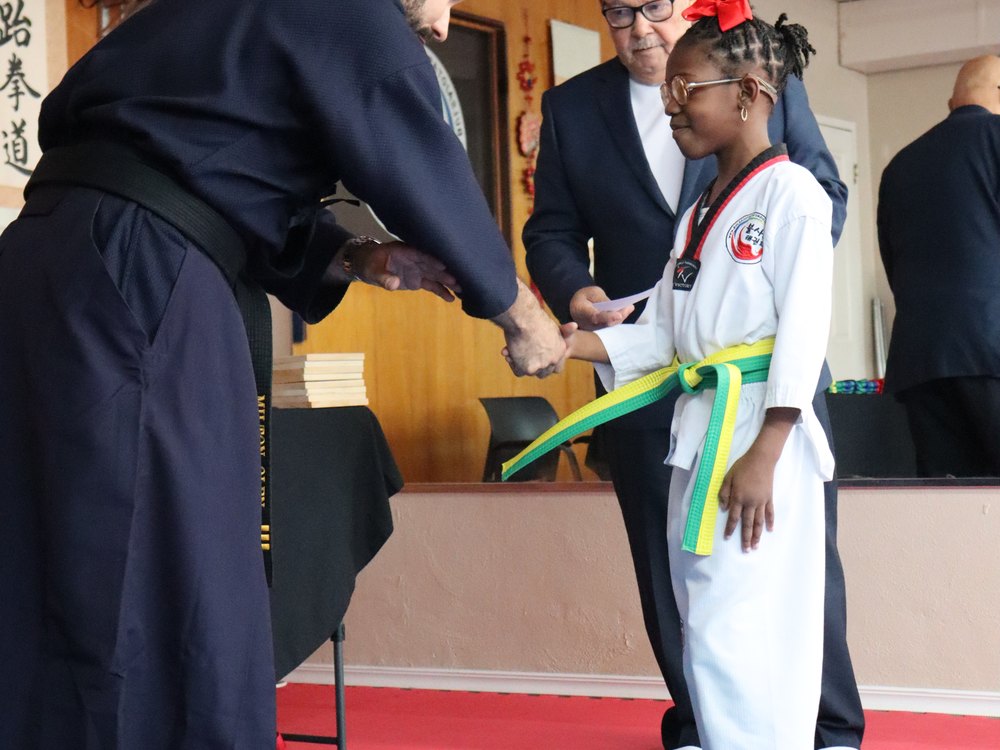
Families often ask what a student is expected to do as they move through Taekwondo. The short answer is to keep learning: arrive ready to try, listen to coaching, practice safely, and treat training partners with respect. A student does not need to be perfect to make progress.
Build dependable habits
Consistent attendance gives students more chances to learn and revisit the curriculum. In class, students are encouraged to pay attention, ask questions when they are unsure, accept corrections, and try a technique again. When an instructor assigns home practice, keep it brief, safe, and focused on material already taught.
Students also share responsibility for a good training space. That means following safety directions, controlling techniques, taking turns, and encouraging classmates rather than comparing or putting them down.
Progress is individual
Students do not all learn at the same pace. Age, experience, personal goals, time in class, confidence, and life outside the dojang can all affect a student's path. USA Taekwondo's athlete development model describes development as a journey shaped by an athlete's age, goals, and commitment, with learning and personal growth valued alongside results.
At Bulsajo, belts and curriculum stripes mark stages of learning. They are milestones, not a race or a promise that promotion happens after a fixed number of weeks. Instructors use the school's current curriculum and graduation process to guide readiness. A student can make meaningful progress through improved focus, safer movement, better understanding, and perseverance even before the next belt.
How families can help
- Praise effort, focus, kindness, and improvement—not only a new belt.
- Ask what skill the student is working on now, rather than comparing their pace with another student.
- Keep home practice positive and use only techniques the instructor has assigned.
- Talk with the instructor when you have questions about attendance, curriculum, or readiness for graduation.
Every new rank opens another chapter of learning. See the Bulsajo belt guide for the current rank sequence, and the Graduation Day page for current process details.
Sources and further reading
- USA Taekwondo: American Development Model — age-appropriate stages, athlete goals, and growth through sport.
- Bulsajo: Belt Guide — the studio's current rank and curriculum information.