
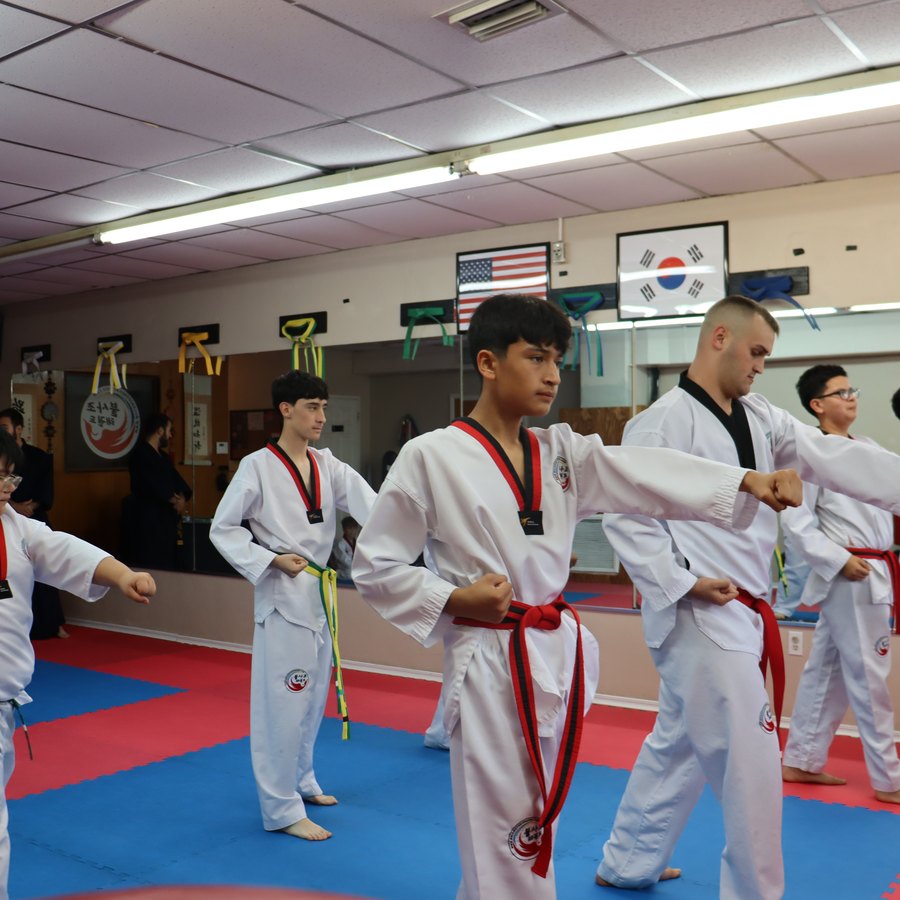
Taekwondo is never a tool for intimidating, threatening, or bullying someone. Our goal is for students to grow in confidence and self-control, and to use what they learn with care. Bullying may happen at school, online, in a team, or in the community; students should not have to handle it alone.
Bulsajo's three-stop teaching method
We teach students a simple sequence for setting a boundary and moving toward safety. It is a coaching framework, not a rule that a child must endure two incidents before asking an adult for help.
- First stop: give a clear warning when it is safe. Use a steady voice: “Stop. I don't like that.” Be direct and move toward a safer place if possible. A student does not need to give a warning if doing so would increase danger.
- Second stop: repeat the boundary, leave, and tell an adult. If it is safe to speak, repeat “Stop.” Then move away and tell a parent, teacher, coach, or another trusted adult what happened. Keep reporting if it continues. A child is not responsible for making bullying stop by themselves.
- Third stop: protect yourself from an immediate physical attack. If someone is actively attacking and there is no safe way to get away, a student may need to use instructor-taught defensive skills to stop the immediate harm and create a chance to escape. Use only what is needed to get safe, stop when able to leave, and get an adult. Never chase, punish, or keep fighting to settle a score.
If danger is already happening, skip the warning steps and focus on getting away and getting help. Call for an adult. For an immediate serious threat, a weapon, or an injury, get emergency or medical help right away.
Self-defense is not retaliation
There is an important difference between protecting yourself from an ongoing physical attack and hitting back because you are angry or want to teach someone a lesson. The third stop is only about immediate safety when leaving is not safely possible. It does not give permission to start a fight, threaten classmates, or use techniques outside the defensive situation for which they were taught.
Federal anti-bullying guidance advises adults not to tell a bullied child to physically fight back, because the child may be hurt or face other consequences. It emphasizes listening without blame, involving trusted adults, making a safety plan, and following up. Our third stop is Bulsajo's narrow self-protection lesson for an immediate physical danger; it is not a general bullying response. Leaving and telling a responsible adult remain the first choices whenever possible.
Adults have a role
Parents and caregivers can listen calmly, reassure a child that they are not to blame, and share ongoing concerns with the school or organization responsible for the setting. If something happens at Bulsajo, tell the instructor so adults can help protect students, understand what occurred, and follow up. Students who see bullying can support the person affected and tell an adult rather than putting themselves in danger.
Sources and further reading
- StopBullying.gov: Support the Children Involved — support, trusted adults, safety planning, and why adults should not tell children to physically fight back.
- StopBullying.gov: Respond to Bullying — immediate safety, adult intervention, and when to seek police or medical help.
- U.S. Center for SafeSport: Bullying — How to Respond — response practices for youth sport settings.