
The Way of Taekwondo
In Taekwondo, Do is often translated as the way or discipline. Kukkiwon describes practice as repeated training that shapes body and mind. At Bulsajo, the way is experienced through movement, effort, correction, and respect—shared in the dojang and discovered by each student.
From Every Failure We Rise
That line is printed on the back of our camp shirts, and it is not decoration. Bulsajo — 블사조 — is Korean for the phoenix, the bird that rises from its own ashes. It is the mark on our crest and it is the whole idea of the school.
Progress takes shape through practice
A belt marks time and growth, while the work lives in each repetition: a missed kick, a remembered form, a correction received and tried again. Every student follows an individual pace. The mat, the movement, and the shared effort are part of the same path.
Spirit Put Into Practice
Kukkiwon describes the spirit of Taekwondo through Geukgi (self-overcoming) and Hongik (benefiting the world). Five virtues offer ways to explore those ideas in daily conduct. Their meaning grows through training and the way we meet one another.
Innae 인내 · Perseverance
Work through difficulty at a suitable pace, return to a challenging movement, and keep learning from each attempt.
Yonggi 용기 · Courage
Meet a difficult task with steadiness, and find the courage to seek help when it is needed.
Yeui 예의 · Courtesy
Meet others with humility and respect: listen, give space, and care for training partners.
Jeongui 정의 · Justice
Use skill with fairness and care for others; consider the group as well as oneself.
Bongsa 봉사 · Service
Share effort, support others, and contribute to the dojang community.
Sources: Kukkiwon, Spirit of Taekwondo, and USA Taekwondo, What Is Taekwondo? for the meaning of Do.
One Practice, Many Personal Meanings
Taekwondo is lived in the training itself: attention, balance, effort, and respect, practiced together. What each person carries into daily life is individual and unfolds over time.
Return to the movement
A technique takes shape through focused repetitions, patient correction, and the choice to try again.
Train with others
Partner practice brings attention to timing, control, respect, and the responsibility we share on the mat.
Meet the challenge
Each student encounters difficult forms, new skills, and competition in their own way and at their own pace.
Carry the values forward
Courtesy, courage, perseverance, justice, and service can offer a language for reflection beyond class; each person gives those ideas meaning through experience.
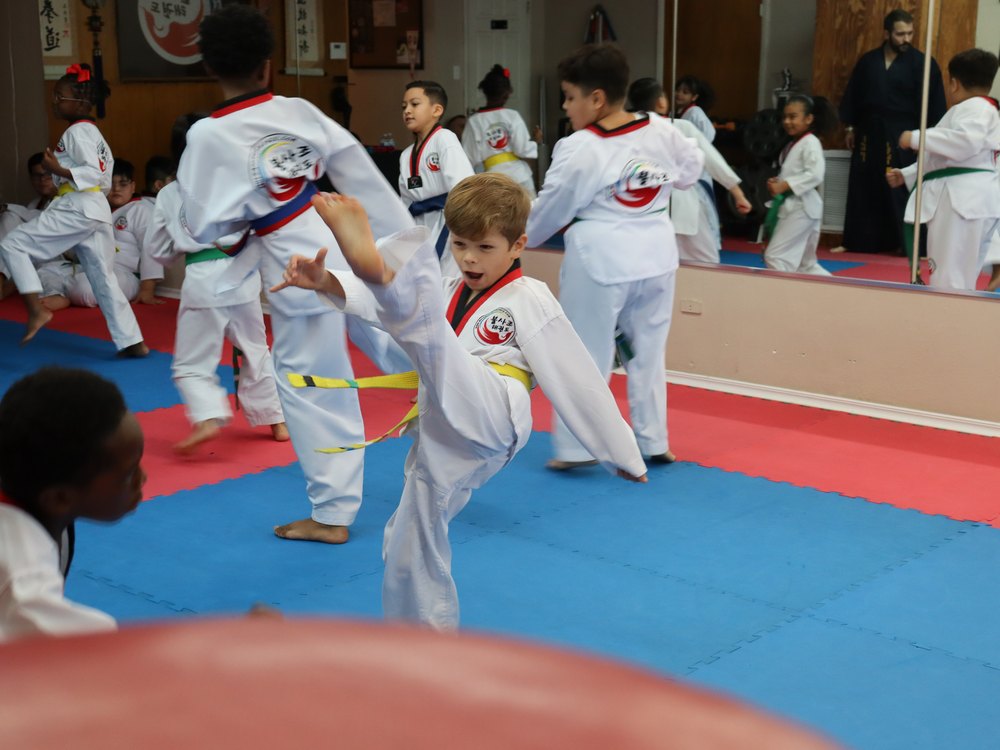
The Practice Lives in the Dojang
Bulsajo's Taekwondo carries a living tradition of movement, form, terminology, and respect. Its roots and affiliations connect our local dojang to a wider martial arts community, including Kukkiwon and Moo Duk Kwan.
The art comes alive through practice: students listen, move, receive correction, and return to the technique. Each class is shared, while each student experiences the path in a personal way. That experience grows through steady effort and time on the mat.
The people who teach and train carry the tradition forward together. The art itself remains the center of the experience. Its rewards grow through disciplined effort and the sacrifices each student chooses to make for practice.
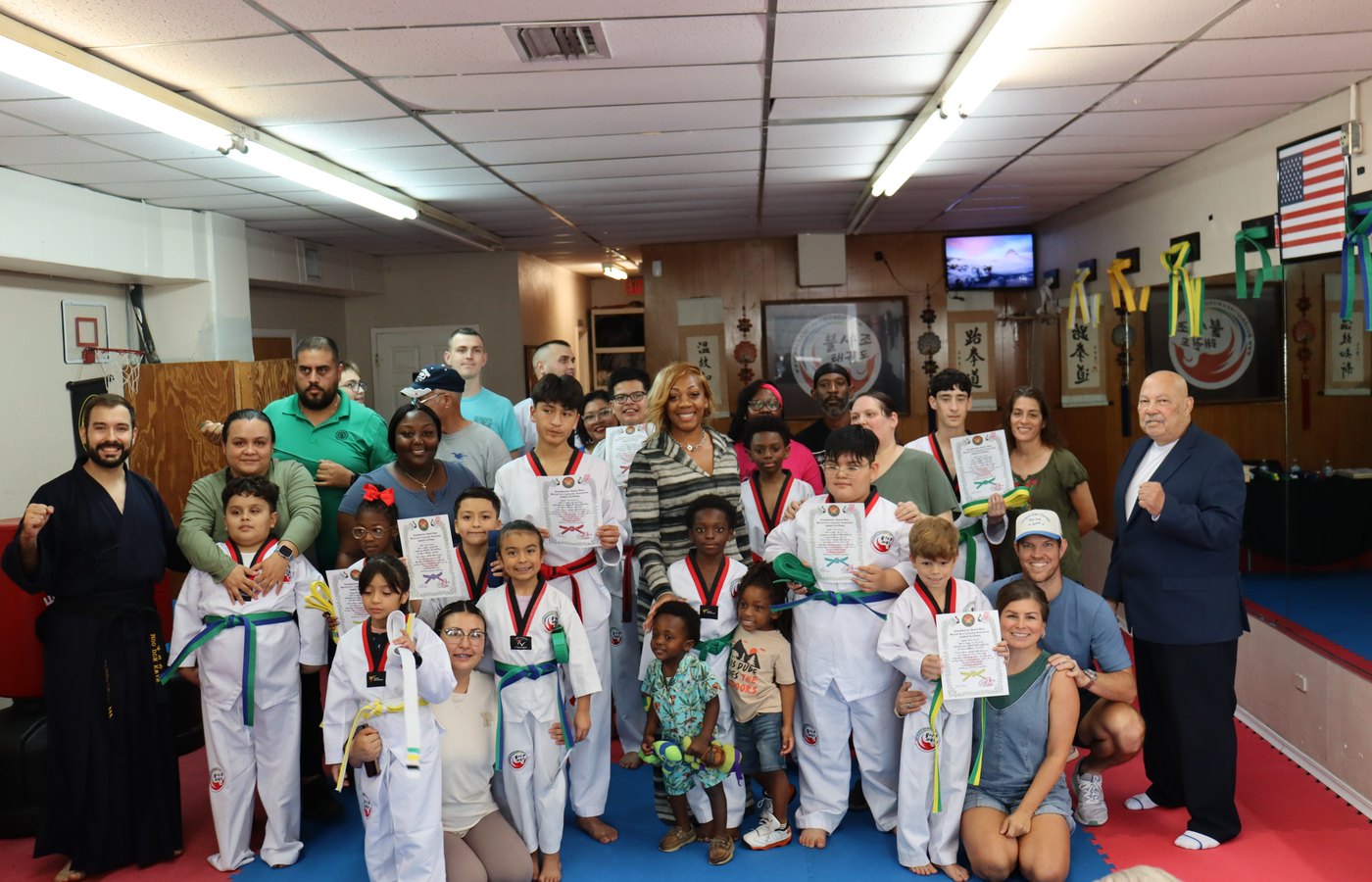
A Martial Art in Its Community
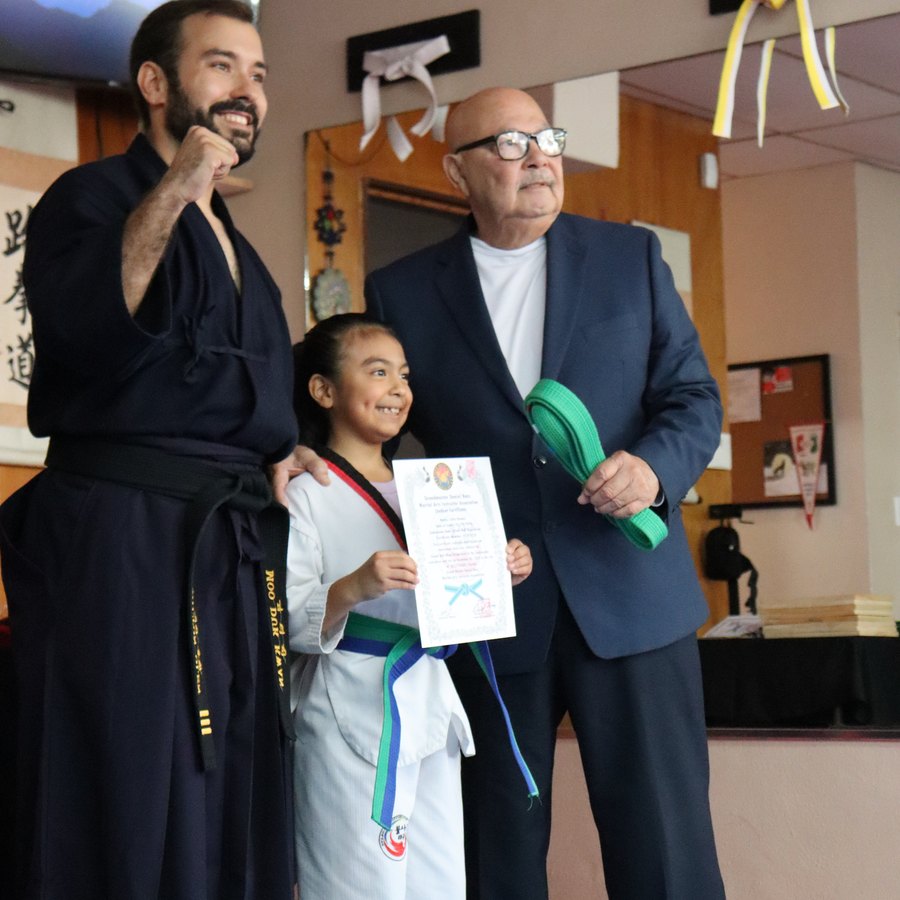
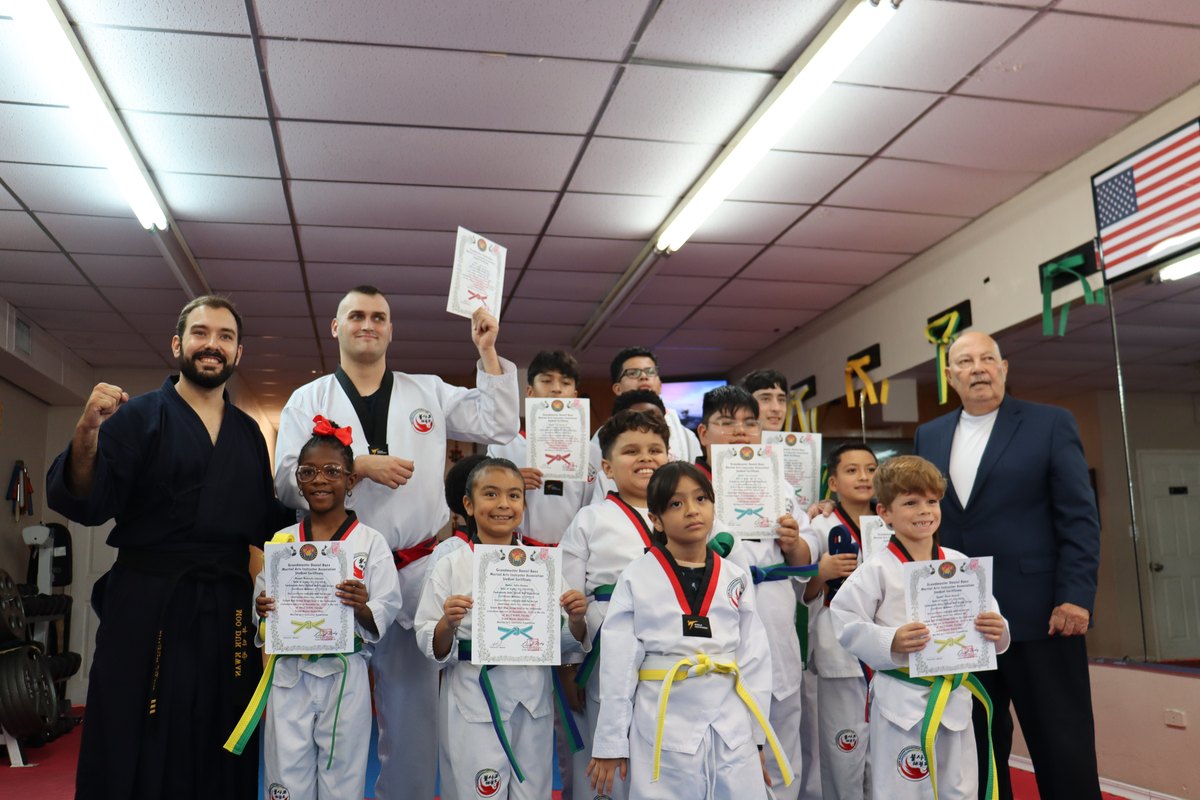
Bulsajo is a Glades school. Belle Glade and Clewiston are where our students live, where their families sit down to watch a graduation, and where the camp buses go on a field trip day.
The relationships matter in both directions. In the martial arts world we are tied to the Kukkiwon, World Moo Duk Kwan, the Asociación Víctor Estrada in Mexico and Kombat Taekwondo — which is how a belt earned in Belle Glade means something outside of it. Locally we run after school pickup and holiday camps, and we sit alongside the Palm Beach County Police Athletic League, which runs youth programs here in Belle Glade.
Not every family that walks in is looking for a black belt, and that is fine. The door is open to anyone in the Glades who wants the chance to learn this.
Where It Happens
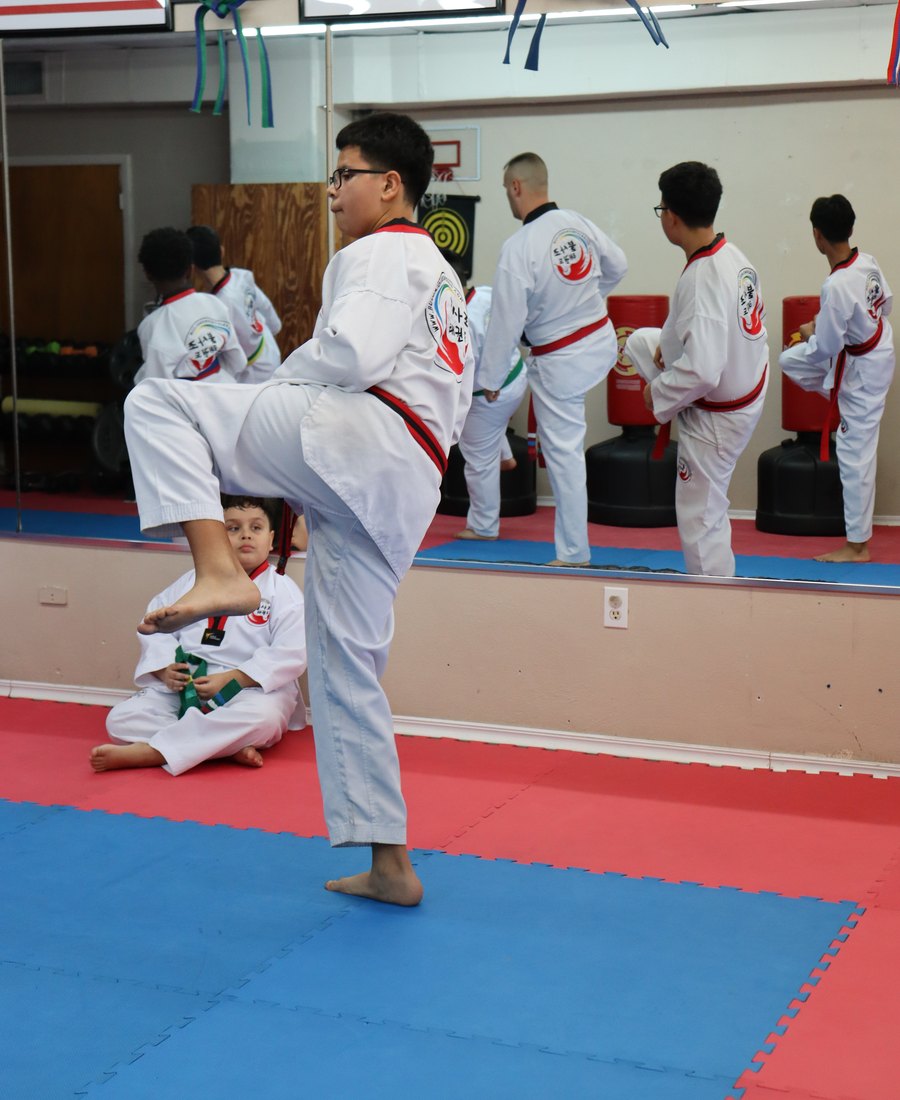
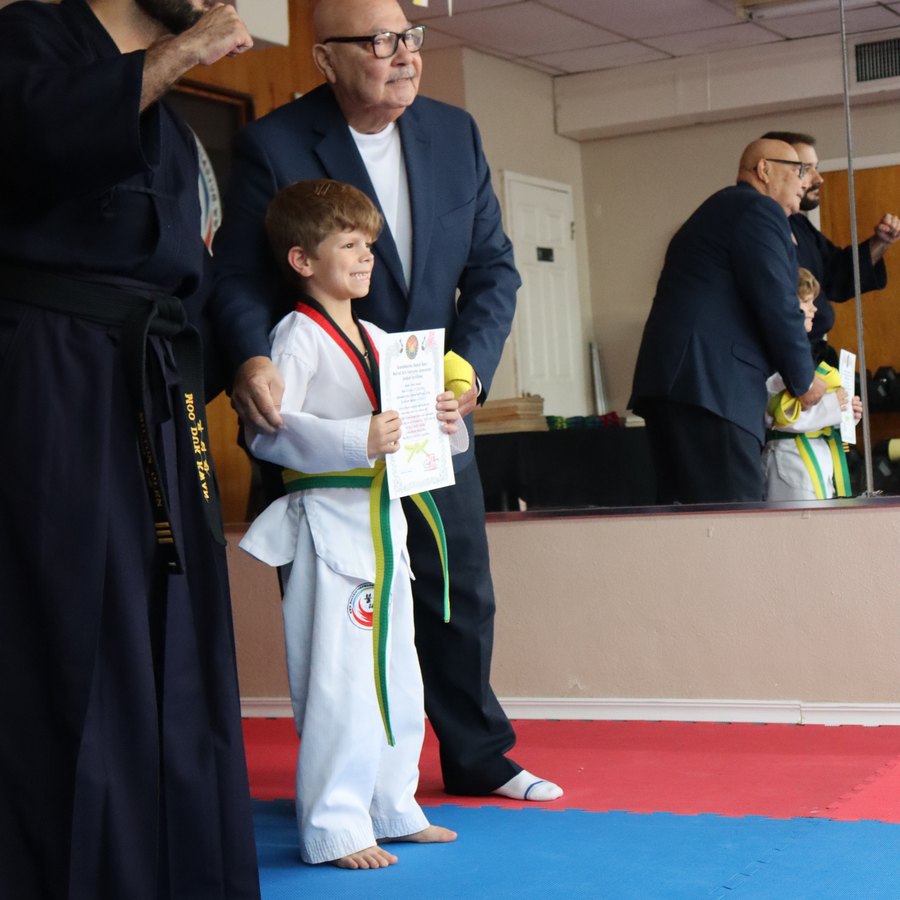
Mats, flags, heavy bags, and a room full of kids who count down to the next class.
Questions
What age can my child start?
Do we need any experience?
What should we wear to the first class?
How long does a black belt take?
Is Taekwondo safe for kids?
Are we locked into a contract?
Come Meet Us
Watch a class, say hello, and decide afterwards. You are welcome any week.